Every Great Dish Has a Story
A memorable meal is about more than flavor. Long after the last bite, people remember how the food made them feel. They remember the care behind every detail, the personality on the plate, and the story woven into every ingredient.
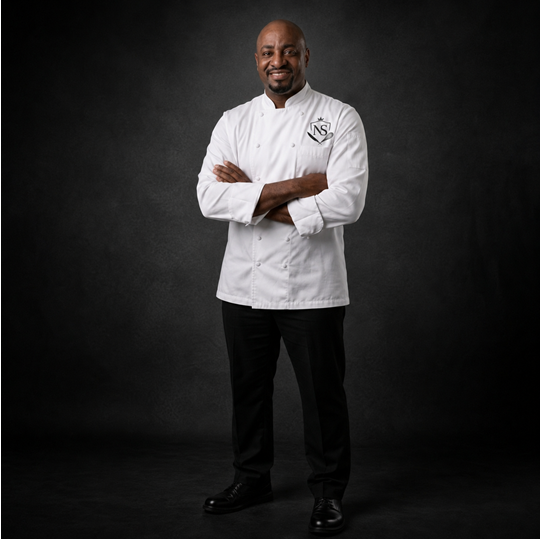
For Chef Macio D. Sexton Sr., cooking has always been about much more than preparing food. It is a form of expression, a reflection of culture, and a way to leave a lasting mark on the people who gather around the table. Throughout Black Chef in White America, readers discover that every recipe carries a deeper meaning. Behind every carefully prepared dish is a chef who refused to let circumstances define his potential.
Cooking with Purpose
Many people enter the culinary profession because they enjoy cooking.
Others stay because they discover a calling.
Sexton belongs to the second group.
His career has never been driven by recognition alone. Every kitchen became an opportunity to learn, lead, and challenge assumptions about what a Black chef could accomplish.
That purpose eventually evolved into what he calls I AM Kulinary A.R.T.S., a philosophy that encourages chefs to combine technical excellence with resilience, creativity, leadership, and authenticity.
Rather than simply preparing meals, the movement challenges culinary professionals to create experiences that reflect both skill and identity. For Sexton, excellence is not an occasional achievement. It is a daily commitment.
Honoring the Hands That Changed American Cuisine
Modern American food has been shaped by generations of Black culinary innovators whose influence is often greater than their recognition. Their techniques, traditions, and creativity helped define the country’s culinary identity while their stories frequently remained in the background.
In Black Chef in White America, Sexton shines a light on these remarkable pioneers, celebrating their contributions and ensuring their influence is remembered alongside their achievements. Their work reminds us that food has always connected cultures, preserved history, and brought communities together. Every recipe handed down through generations represents far more than instructions on a page.
- It represents resilience.
- It represents heritage.
- It represents legacy.
Beyond Expectations and Stereotypes
One of the most powerful themes throughout Sexton’s journey is the challenge of being placed inside expectations that never reflected his true abilities. Too often, Black chefs are expected to specialize in only one style of cuisine, regardless of their training or experience.
Sexton refused to accept those limitations.
Across decades in professional kitchens, he mastered French techniques, Mediterranean flavors, Caribbean influences, Italian traditions, and contemporary American cuisine. His career became proof that talent cannot be measured by assumptions.
A chef’s ability should be judged by craftsmanship, creativity, discipline, and execution, not by stereotypes attached to appearance or background.
Every Recipe Marks a Chapter
Unlike many culinary memoirs, the recipes throughout Black Chef in White America are not included simply to showcase cooking techniques. Each one reflects a specific moment in the author’s professional journey.
Some represent difficult lessons learned while working in demanding kitchens. Others celebrate international experiences that expanded his understanding of food, culture, and hospitality. Every dish captures a milestone, preserving memories through flavor and technique.
Together, these recipes create a culinary timeline that follows the evolution of both the chef and the man behind the apron.
Leadership Begins in the Kitchen
The kitchen is often described as one of the most demanding workplaces in any profession. It demands precision under pressure, teamwork during chaos, and unwavering discipline every single day.
For Sexton, leadership has never been about titles or authority. It is demonstrated through preparation, accountability, consistency, and respect for the people working beside you.
Great chefs do more than produce exceptional food. They build environments where creativity flourishes, standards remain high, and every member of the team has the opportunity to grow. Those lessons extend far beyond restaurants. They apply to every workplace, every organization, and every leader committed to helping others succeed.
Building a Lasting Legacy
Throughout his memoir, Sexton returns to one powerful idea: lasting change begins when people stop waiting for permission to be seen. Instead of asking for a place at someone else’s table, they create opportunities that welcome others. That philosophy shapes not only his career but also his vision for the future of the culinary industry.
By mentoring others, celebrating overlooked voices, and encouraging excellence without limitation, he hopes to inspire a new generation of chefs who see possibility where previous generations encountered barriers. The goal is not simply to create remarkable food. It is to create lasting impact.
More Than a Culinary Memoir
Black Chef in White America is ultimately about much more than restaurants and recipes. It is a story of resilience, leadership, cultural pride, and the determination to pursue excellence regardless of the obstacles along the way.
Chef Macio D. Sexton Sr. reminds readers that every meaningful achievement begins with courage—the courage to learn, to lead, to create, and to remain authentic even when the journey becomes difficult. Because the most unforgettable dishes never tell just one story. They tell the story of the people brave enough to create them.Continue Reading: Explore the I AM Kulinary A.R.T.S. philosophy, the culinary journey throughout Chapter 10, and the inspiring tribute “Voices of the Flame: Black Chefs Who Cook With Purpose” in Black Chef in White America.